When the sun sets over Meteora
The sun drops behind the Meteora rocks around 5:10 pm in December and close to 9:00 pm in early summer. The local sunset tours move their start time to match, so a winter tour leaves after lunch and a June tour in the late afternoon. This page gives rounded times for each season and the start times we saw.
Sunset times through the year
The times below are rounded for Kalambaka and shift by a few minutes within each month. Greece moves its clocks in late March and late October, which explains the big jump between March and April.
| Season | Sunset around | Tour start |
|---|---|---|
| Winter (December to February) | 5:10–6:00 pm | Visit Meteora 2:00 pm in December and January; horse ride 4:00 pm |
| Spring (March to May) | 6:35–8:35 pm | Later than in winter; check the booking step |
| Summer (June to August) | 8:30–8:55 pm | Visit Meteora 4:30 pm in June; e-bike 6:00 pm on a June date |
| Fall (September to November) | 5:15–7:45 pm | Earlier again as the days shorten; check the booking step |
The tour starts come from the booking step on the dates we tried. For the months in between, the operators set the time by the sunset, so the start on your date is the one to trust.
Winter: an early start and a short wait
In December the sun sets around 5:10 pm and in January around 5:25 pm, with daytime highs near 10–11 °C (50–52 °F). Visit Meteora's tour starts at 2:00 pm in both months, so the sunset viewpoint comes as the last stop.
The horseback ride from Kastraki starts at 4:00 pm in December and January. In winter the monasteries also close earlier, which is why an afternoon tour can fit only one of them inside.
February pushes sunset to around 6:00 pm, at about 12 °C (54 °F) in the daytime. Mist and rain are more common in the cold months, and the odd snow can sit on the rocks.
A winter sunset tour ends close to dark, so the drive back to your hotel runs in the evening. Reviewers of Meteora Trip mention guides who give restaurant tips for the night on the way.
Longer evenings and later starts in spring
March brings sunset around 6:35 pm at about 15 °C (59 °F). After the clocks change, April sunsets come around 8:05 pm and May sunsets around 8:35 pm, with highs of about 20 °C (68 °F) and 26 °C (79 °F).
We did not read the spring start times for every tour. They move later as the light lasts longer, so check the time shown in the booking step for your date before you plan dinner.
Late sunsets and hot afternoons in summer
In June and July the sun sets around 8:55 pm, and in August around 8:30 pm. Visit Meteora's tour started at 4:30 pm on a June date, and the e-bike ride at sunset started at 6:00 pm.
Afternoons are hot, often above 30 °C (86 °F), with July highs around 34 °C (93 °F). A later start spares you some of the heat, but water and a hat still matter on the open viewpoints.
On Mondays from April 1 to August 31, Meteora Trip starts about an hour earlier and goes to St Nicholas or Holy Trinity in place of St Stephen. Look at the weekday when you book a summer evening with that company.
Fall: our favorite stretch for a sunset
September sunsets come around 7:45 pm with highs near 28 °C (82 °F), and October ones around 6:55 pm at about 21 °C (70 °F). In our opinion April, May, September and October give a mild mix of warmth and long evenings.
November drops back to a sunset around 5:15 pm and highs near 15 °C (59 °F). It is also the month when the Athens day trips start adding the sunset, which our page on the sunset from Athens covers.
If you are still choosing the month itself, our best time for a sunset tour page weighs summer heat against winter mist. Pick the season first, then the weekday.
Why the tours start in the afternoon
A sunset tour has to fit a monastery visit before closing time and still end at a viewpoint as the sun goes down. The Metropolis says each monastery keeps shorter hours in winter, with Great Meteoron open from 9:30 am to 2:00 pm then.
That is why the local minibus tours take you inside one monastery and show the others from outside. Our monasteries page lists which one each tour enters, and what happens on the days it is closed.
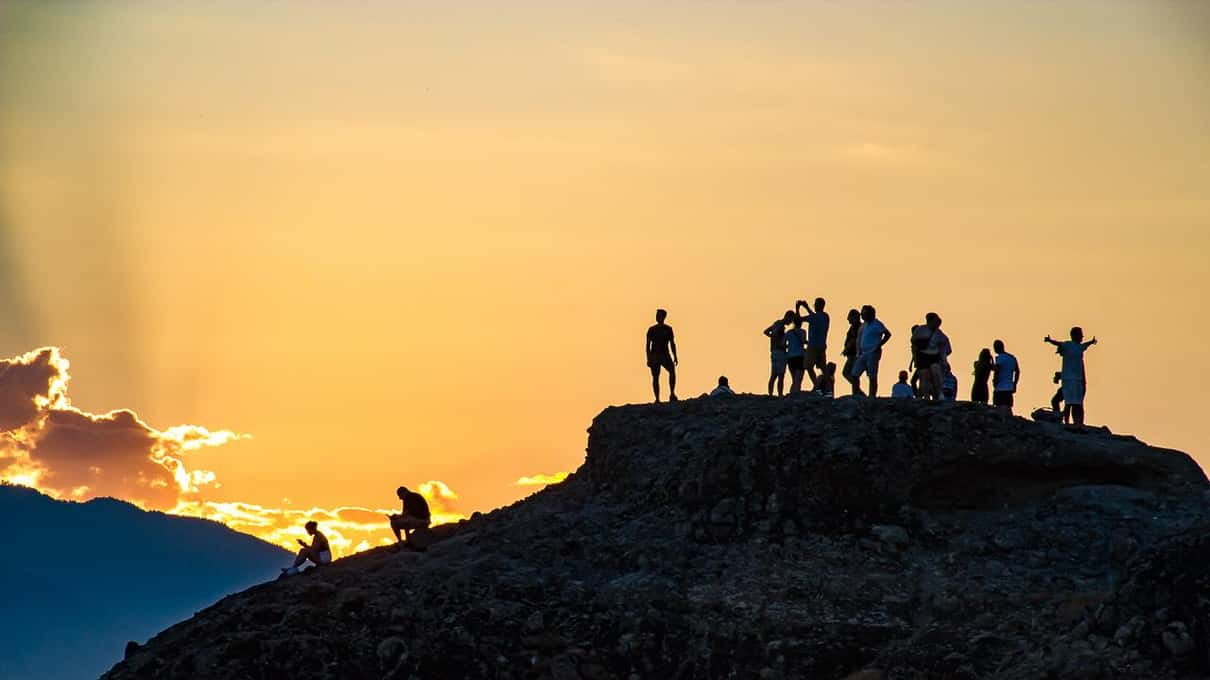
A start time that follows the sun
Our pick fetches you from your hotel in either town and makes its last stop at a viewpoint near Roussanou. The start moves from 2:00 pm in winter to 4:30 pm in June.
How long the light lasts at the viewpoint
The warm light starts before the sun touches the ridge, in what photographers call the golden hour. The sky often keeps its color for a while after the sun has gone, so the last minutes can be the finest.
Meteora Trip lists 30 minutes at its sunset viewpoint. Clouds and mist can hide the sun on any date and no tour promises a sunset, so a second evening in town gives you a spare chance.
For camera settings and where to stand, read our sunset photo tips. If you will be out after dark in the cold months, our page on what to wear covers layers for the evening.
Once you know your date, choose a Meteora sunset tour whose start time suits your day. Our Meteora comparison shows the length of each option, so you can see when you will be back in town.